Theory of Operation
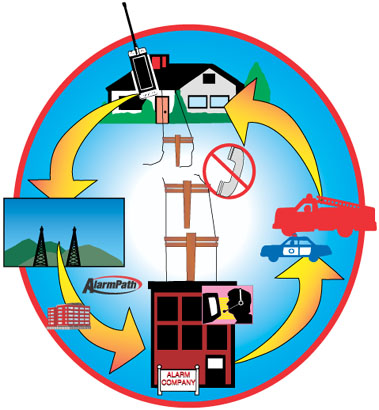
The AlarmPath AP-3G subscriber unit is triggered by an alarm condition; it then sends a signal to the wireless network and receives an acknowledgement. The wireless network then passes that data on to any central station monitoring facility using standard reporting formats (pulsed data, Contact ID), No additional equipment is required by the central station to receive AlarmPath data. This whole process takes a very little time; in fact most wireless alarms are reported to the central station before the alarm panel dialer reports the same alarm.
How we differ from "Control Channel Cellular"
Our network was designed for and is only used for secure digital data, which means subscriber units always have accessibility to the network. Our network will always give the subscriber units top priority because monitoring them is it's only job. The same cannot be said for control channel cellular based products. These systems make use of cellular telephone networks control channels, which means control channel Alarm Data is given a lower priority than regular cell phone users. This could mean no, or delayed access to the cellular network, and to reporting an alarm condition. In addition, control channel cellular products only work on the older analog cellular network. Most new cell phones and cellular sites are based on Digital, or PCS systems, and do not offer support for control channel cellular applications, and the manufactures of these products do not have agreements with all cellular network providers. So cell phones may work where control channel cellular does not work.
Any questions? Email: info@alarmpath.com